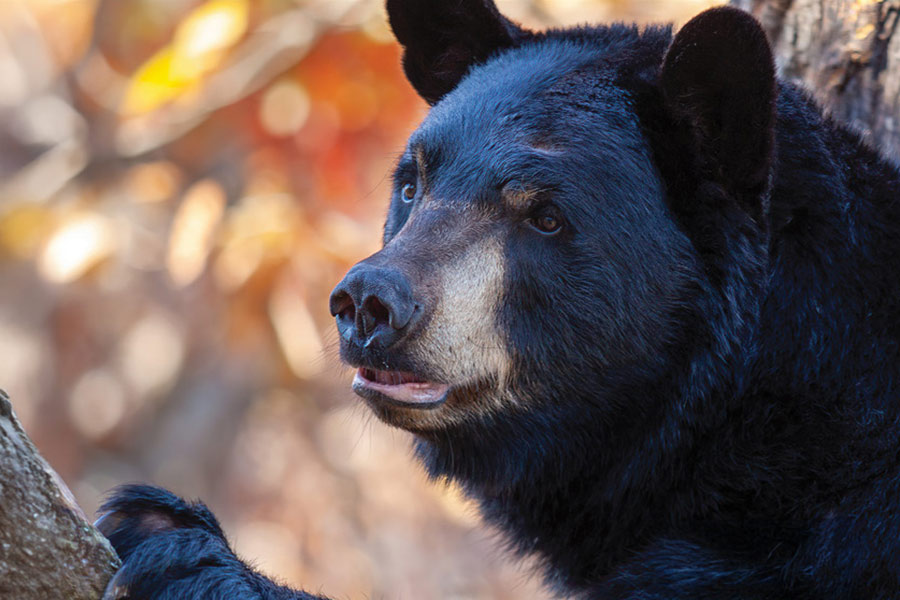
Three black bears showed up in Utah County in a single week, and wildlife officials say drought is pushing the animals out of the mountains and toward the kind of foothill neighborhoods where Alpine and Highland residents live.
The latest sighting came Saturday, Aug. 15, when a bear appeared near 50 N 1400 E in Springville before retreating uphill, according to ABC4. Springville Police confirmed it was the third bear found in the county that week. A separate bear wandered through Provo neighborhoods Wednesday, Aug. 12.
The Utah Division of Wildlife Resources says it is dealing with more bear issues statewide in 2026 than in previous years. The pattern extends well beyond Utah County. On Tuesday, Aug. 11, DWR tranquilized a 15-year-old female black bear that had climbed a tree in Spanish Valley near Moab. That bear was later euthanized rather than relocated.
Brandon Behling, DWR conservation outreach manager, told the Salt Lake Tribune on Aug. 14 that the decision was based on the bear's age, drought conditions and the tendency of older female bears to return after relocation.
"Having a bear continue to return to or remain in an area with people can present safety concerns to the public," Behling said.
Why it's happening
Plants and vegetation make up about 90% of a black bear's diet. Severe drought across Utah has shriveled that food supply, and DWR biologists say bears are descending to lower elevations to scavenge. Alpine City's own water committee documented the state's severe drought status in April.
The numbers are stark. DWR has euthanized more than 15 bears statewide so far in 2026, compared with seven by the same point last year, according to the Tribune. The agency put down 24 bears in all of 2025, three in 2024 and six in 2023.
What foothills residents should do
Alpine and Highland sit directly at the Wasatch mountain-urban interface. No bear sightings have been confirmed in either city, but the county-wide pattern and drought-driven range expansion put foothill neighborhoods on alert.
DWR guidance for reducing encounters:
- Secure garbage cans, pet food and bird feeders.
- Keep a close eye on children and pets.
- Do not approach or follow a bear.
If you encounter a black bear:
- Stand your ground. Do not run, back up or play dead.
- Do not climb a tree. Black bears can run up to 35 mph and are excellent climbers.
- If a black bear attacks, fight back with whatever is available.
- A bear standing up or grunting is not necessarily aggressive; it is trying to get a better look or smell.
Residents who spot a bear should call 911. Additional bear safety resources are available at wildawareutah.org.
DWR said the reduced food supply could lead to more bear conflicts throughout the summer as animals range more broadly in search of food.