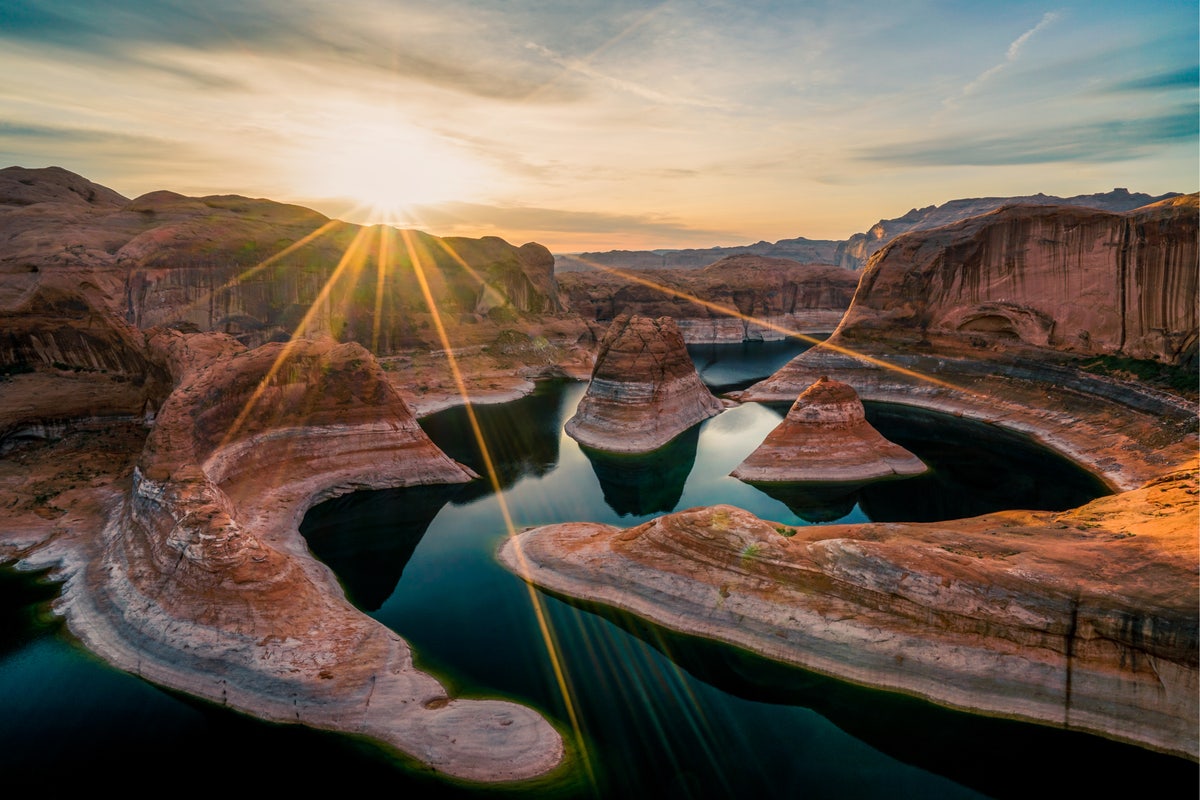
Lake Powell dropped to an all-time record-low elevation of 3,519.91 feet on Sunday, Aug. 16, breaking the previous record of 3,519.92 feet set in April 2023 and intensifying pressure on local water supplies that already have Lehi residents restricted to two-day-a-week watering.
The milestone, confirmed by U.S. Bureau of Reclamation data and reported by ABC4, means the nation's second-largest reservoir is now more than 20 feet lower than it was at the start of 2026 and roughly 30 feet from the level at which Glen Canyon Dam would stop generating hydroelectric power. Federal officials noted the reading is provisional and subject to revision given the record's narrow 0.01-foot margin, but scientists say the reservoir's downward trend is unmistakable.
"We are in completely new territory," said Jack Schmidt, director of the Center for Colorado River Studies at Utah State University. Schmidt noted that combined storage in Powell and Lake Mead has not been this low since 1957, before Glen Canyon Dam was even built.
What it means locally
Lehi's Phase II water restrictions remain in force. Outdoor watering is limited to two days per week with at least 48 hours between cycles. Since the restrictions took effect in May, residents have cut water use by roughly 50 million gallons per week, saving a total of 382 million gallons at midseason, an 18% reduction from 2025, as we reported Aug. 5. Lehi Mayor Paul Binns cited record-low snowpack and ongoing drought when he announced the restrictions in the city's May newsletter.
Lehi's water operations supervisor warned in early August that the savings ease but do not eliminate the threat of stricter Phase III restrictions. Neither Binns nor city staff have commented publicly on whether the new Powell record changes that calculus.
In Alpine, the city is evaluating a $9 million water revenue bond to fund the Heritage Hills Well and a booster pump and pipeline on 400 West. Pressurized irrigation accounts for 80–85% of Alpine's total water use, and the city has no well in its high-elevation zone, creating pressure problems in upper neighborhoods during peak demand. At the June 9 Alpine City Council meeting, Mark Anderson of Zions Public Finance outlined a financing structure: interest-only payments for the first four years, then roughly $640,000 annually. No formal vote date has been set.
Alpine Mayor Carla Merrill said planning and design work need to begin soon. Staff estimated the well would not be complete until 2028 even if the city moves quickly. Steve Burrows, chair of Alpine's Water Citizens Advisory Group, told the council at that June 9 meeting that future water conditions pointed toward less available water, not more.
Federal decisions ahead
The Bureau of Reclamation released a final environmental review on July 31 for post-2026 operations of Powell and Mead, setting out a 10-year adaptive framework through 2036. The agency has not yet specified the exact size of upcoming water cuts, but a decision is expected before year-end when current operating guidelines expire.
Schmidt said the Bureau's most probable forecast calls for water inflows into Powell to reach only 75% of average. Researchers warned that combined storage was falling by about 16,000 acre-feet per day since March and that record lows are likely to continue until spring snowmelt arrives.
Where residents can weigh in
The Central Utah Water Conservancy District is holding Truth in Taxation hearings on a proposed tax rate increase on Monday, Aug. 24, in Roosevelt; Tuesday, Aug. 25, at district headquarters in Orem; and Wednesday, Aug. 26, at district headquarters in Orem, where the board will vote on the final rate and budget. The proposed change would increase taxes by approximately $1.07 annually on a $325,000 home.