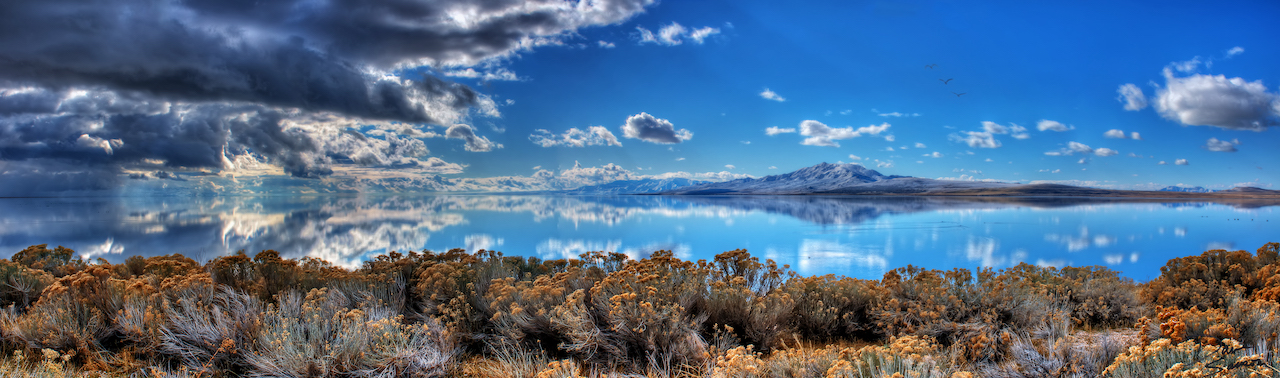
Utah's reservoirs hold just 54% of their capacity heading into the hottest stretch of summer, a 15-percentage-point drop from the same date last year, according to the state's July Water Availability Update, as reported by ABC4 on Tuesday, Aug. 4. The report was released Saturday, Aug. 1.
For residents in Lehi, Alpine and surrounding communities already living under watering restrictions, the numbers reinforce what local officials have been saying for months: conservation isn't optional.
Rain fell, but reservoirs didn't fill
July precipitation statewide hit 143% of normal, and year-to-date valley accumulation stands at 103%. Yet the monsoon rains did not replenish reservoir storage. Soil temperatures are at or near record highs across nearly every region of the state, meaning moisture evaporates or is absorbed before it reaches streams and reservoirs.
High-elevation precipitation fared better at 181% of normal, but year-to-date mountain totals still sit at just 90%.
Lehi's Phase II restrictions hold
Lehi's Phase II water restrictions remain in force. Outdoor watering is limited to two days per week, with at least 48 hours between cycles. No consecutive-day irrigation is permitted.
Lehi Mayor Paul Binns cited record-low snowpack and ongoing drought when he announced the restrictions in the city's May newsletter. Since watering began May 15, residents have cut use by roughly 50 million gallons per week. As we reported July 21, that added up to 382 million gallons saved at midseason, an 18% reduction from 2025. The city's water operations supervisor warned in that report that the savings ease but do not eliminate the threat of stricter Phase Three restrictions, with the hottest weeks still ahead.
Lehi follows the same schedule on its own parks and public spaces, using smart irrigation controllers. Some city parks show brown or stressed grass as a result.
Alpine weighs $9 million water bond
Alpine City is evaluating a $9 million water revenue bond to fund the Heritage Hills Well and a booster pump and pipeline on 400 West. Pressurized irrigation accounts for 80–85% of Alpine's total water use, and the city currently has no well in its high-elevation zone, creating pressure problems in upper neighborhoods during peak demand.
At the June 9 Alpine City Council meeting, Mark Anderson of Zions Public Finance outlined a financing structure: interest-only payments for the first four years, then roughly $640,000 annually in level principal and interest.
Steve Burrows, chair of Alpine's Water Citizens Advisory Group, urged the council to act. "Future water conditions pointed toward less available water, not more," Burrows said at the June 9 meeting, calling the bond decision a generational one comparable to the earlier bonding when the original pressurized irrigation system was constructed.
Alpine Mayor Carla Merrill said planning and design work need to begin soon. Staff estimated the well would not be complete until 2028 even if the city moves quickly.
Statewide outlook
A draft 2026 Utah State Water Plan, released in July for public comment, warns of an imbalance between water demand and a shrinking natural water supply. The public comment period closes Aug. 23.
The draft plan notes outdoor irrigation represents 13% of statewide water depletions.
What's next
No formal vote date has been set for Alpine's water bond. Lehi City Council meets next on Thursday, Aug. 6, at City Hall, where water-related items could appear on the agenda. Residents in both cities can monitor meeting agendas on their respective city websites.



.png)