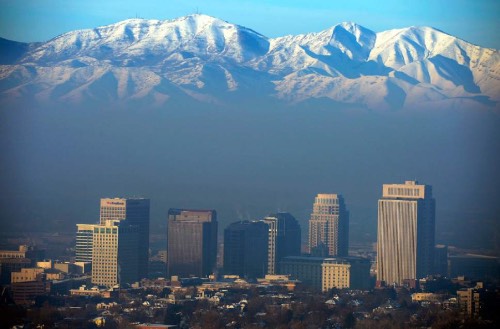
Air quality in Alpine, Highland, Cedar Hills, Lehi, and the rest of Utah County has dropped into the "unhealthy for sensitive groups" range as wildfire smoke drifts south from the Pacific Northwest. The Utah Department of Environmental Quality expects conditions to stay that way through Wednesday, Aug. 5.
The advisory, issued Monday, Aug. 3, covers six Utah counties: Carbon, Davis, Salt Lake, Tooele, Utah, and Weber, according to ABC4 Utah.
Who's at risk
Children, teenagers, older adults, pregnant people, and anyone with asthma, heart disease, or diabetes face the greatest health risk from the smoke, according to EPA air quality guidelines.
The Utah DEQ recommends these groups keep outdoor activities shorter and less intense, take extra breaks, and run air filters indoors. Sensitive groups who must spend extended time outside should wear a mask. General PM2.5 guidance specifies that an N95 respirator is the minimum effective protection against fine wildfire particulate; cloth and surgical masks do not filter particles that small.
Where the smoke is coming from
Massive wildfires burning in Washington, Oregon, and Idaho sent a smoke plume visible on satellite imagery Monday morning stretching eastward into Montana, Wyoming, and northwestern Colorado.
"The thickest smoke is forecast across Washington, Oregon and Idaho through midweek, reducing air quality in cities like Spokane, Portland and Seattle," AccuWeather meteorologist Breanna Grill said. "Poor air quality will also extend southward into Nevada and Utah."
The smoke is arriving during Utah's most destructive fire year since 2018. Nearly 750 fires have burned roughly 425,000 acres statewide so far in 2026, according to KSL. The Widemouth 2 Fire in Millard County alone had burned 36,438 acres as of Monday after tripling in size over the weekend.
When conditions should improve
A wind shift forecast for Wednesday, Aug. 5 is expected to push the smoke away from the Wasatch Front and begin clearing haze over Utah County, according to ABC4 Utah. The advisory could extend if fire behavior worsens.
Residents can check real-time air quality readings for their area at air.utah.gov or at airnow.gov.


.png)