Alpine City Council will take up seven action items Tuesday, Nov. 10, including public hearings on three updated impact fee plans and a budget amendment for fiscal year 2027.
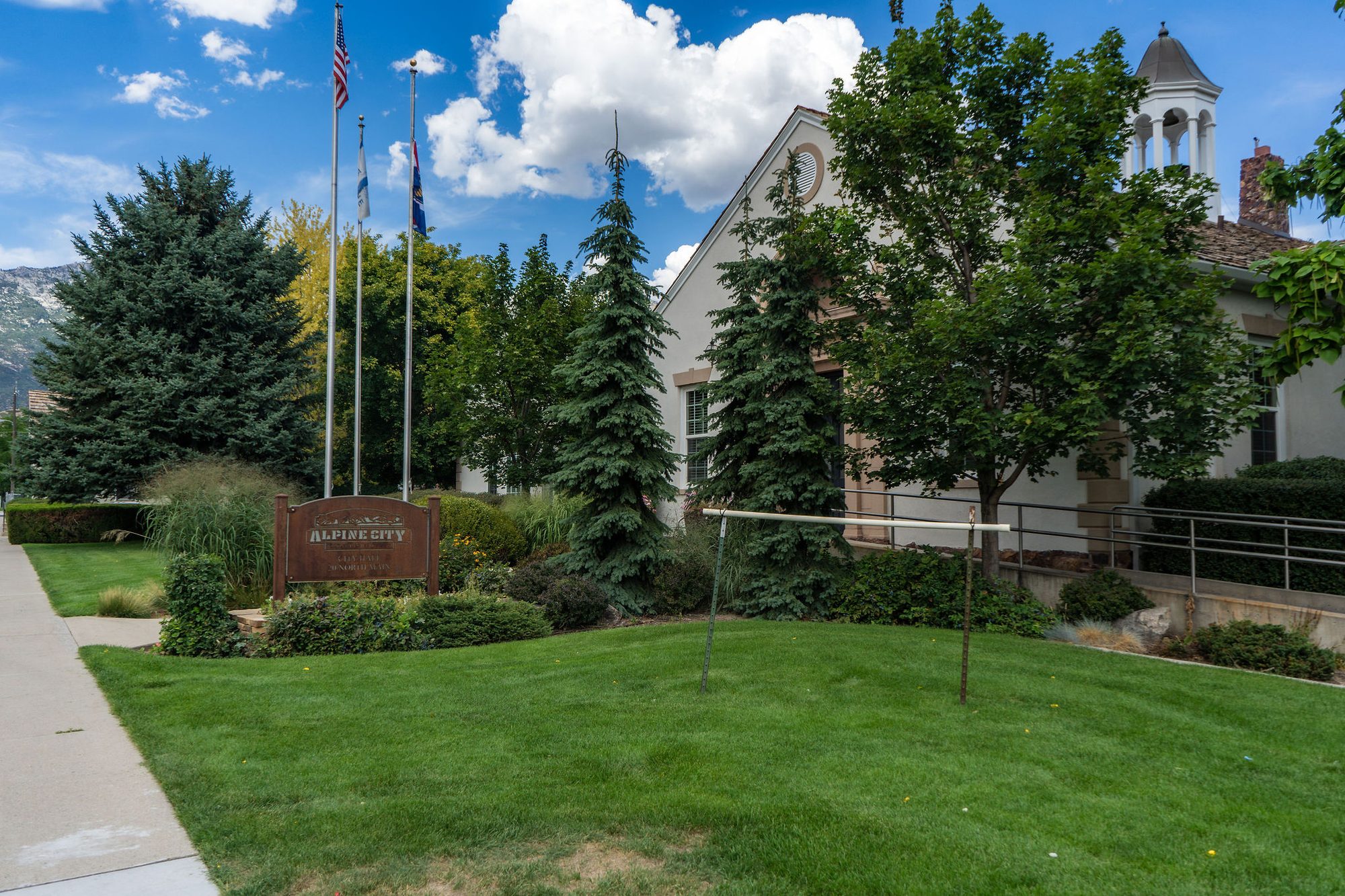
The meeting starts at 6 p.m. at 20 North Main Street. It will also stream on the city's YouTube channel.
Mayor Carla Merrill signed the meeting agenda on Nov. 6.
Impact fees for sewer, water and irrigation
Three resolutions would adopt updated master plans and impact fee analyses prepared by Horrocks Engineers for sewer (Resolution R2026-30), culinary water (R2026-31) and pressurized irrigation (R2026-32). Each carries its own public hearing.
The sewer impact fee analysis proposes a fee of $216.11 per equivalent residential unit (ERU), well below the maximum allowable fee of $5,250 per ERU, according to the agenda packet. The analysis found that Alpine's sewer infrastructure has been built to meet buildout needs. No new sewer improvements are anticipated, though the plan recommends regular reviews.
For culinary water, the proposed fee is $1,180.42 per ERU for homes with pressurized irrigation service. Homes in subdivisions without pressurized irrigation, such as Box Elder, Willow Canyon and Three Falls, would pay multiples of that base fee reflecting their higher culinary water use.
Alpine's population stands at 10,784 and is projected to grow 24 percent to 13,320 by 2046, according to the master plan documents. That growth would add more than 1,100 new sewer ERUs and about 2,280 culinary water ERUs.
John Schiess of Horrocks Engineers, who performed the work, is retiring at year's end and may attend the meeting. City staff recommends adoption of all three resolutions.
Budget amendment and financial snapshot
The council will hold a public hearing on Ordinance 2026-19, a midyear amendment to the FY2027 budget. The agenda packet does not detail the specific line items in the amendment.
A first-quarter financial report presented at the Oct. 27 council meeting by Assistant City Administrator Caden Lyon showed $1.547 million received in fire bond proceeds, with expenses ongoing for the new fire station. The fire station project has a total budget of $6.05 million and was 16.3 percent complete as of October.
July 2026 produced the highest monthly sales tax revenue in eight years, Lyon reported. Year-over-year sales tax revenue continues to climb, with 14 months in the past five years exceeding $200,000.
Council member Andrew Young raised concerns about spending sustainability, noting more than $8 million in approved expenses since January based on his own analysis. Council member Chrissy Hannemann questioned whether that figure included wages and suggested a future discussion on procurement policy.
Alpine Fitness property transfer
The council will vote on whether to begin the process of transferring a small parcel of city-owned land near the Alpine Fitness building on Main Street to gym owner Paul Anderson. Anderson wants the land to meet landscaping requirements for a proposed enclosed accessory building that would replace an approved pergola.
The estimated fair market value of the land is $2,718, assuming $400,000 per acre, according to the staff report. If the council approves, the city would retain an access easement to Dry Creek across the property.
Speed limits and other business
The council will also consider reducing speed limits on certain city streets, though the agenda packet pages containing the staff report on which streets and proposed limits were not included in the publicly available document.
Other items on the consent calendar include a $455,512 payment for the fire station project to SIRQ Construction, a $61,000 payment to Morgan Pavement, approval of crosswalks on Main Street and Red Pine Drive, and the 2027 council meeting schedule.
A discussion item on creating a parking area on city property at 124 East 100 South rounds out the agenda.
What the well-being survey found
At the Oct. 27 meeting, Dr. Courtney Flint, a professor at Utah State University, presented the 2026 Well-Being Survey Report. The online survey, conducted in March 2026 and funded by the Utah League of Cities and Towns (ULCT), drew 190 responses, down from 399 in 2024.
Eighty-eight percent of respondents reported high personal well-being. But 67 percent said Alpine is growing too fast, consistent with 2024 results.
Water supply topped the list of concerns at 91 percent, up 17 percentage points from 2024. Wildfires were a new, high-ranking concern. Great Salt Lake concern rose 21 percentage points, a trend Dr. Flint attributed to statewide policy discussions. Respondents also flagged traffic congestion, development's impact on open space and lack of alternative transportation.
Residents said they most valued Alpine's small-town atmosphere, trails, safety and community events. They asked for interconnected trails and parks, a library or recreation center, sidewalks and better traffic management.
The meeting is open to public comment. Residents can attend in person at 20 North Main Street or watch on the Alpine City YouTube channel.